

smart aleck al is normal about old-timey baseball
Al Mullen on America's past, present, and future pastime.
Al Mullen is a comedian and creator of the Public Transport Magazine, which you can find exclusively on the MTA — and, presumably, in the dens of New York’s most bookish subway rats. Today he is feeling normal about turn-of-the-20th-century baseball, otherwise known as the “dead ball era.” Compared to the modern MLB, dead ball had it all: no corporate sponsorships, cigarettes for breakfast, and ground balls for days. Also, a guy named Oyster Burns.
This interview has been edited for clarity, coherence, and vibes.
JADIE: What are you feeling completely normal about, and how did you first encounter it?
Al: I’m feeling completely normal about turn-of-the-century, old-timey baseball. Like any white man, I watch Ken Burns documentaries, and when I saw the baseball one, I was just obsessed with these larger-than-life characters. They had these incredible nicknames for every player. There’s this guy, “Sad Sam Jones.” They called him that because he looked sad all the time.
You didn’t have any choice over what your nickname was. Athletes today have PR firms that help cultivate an image, but if journalists back then were like, “That dude looks sad,” then that’s what people called you for the rest of your life.
JADIE: He had resting Sam Jones face.
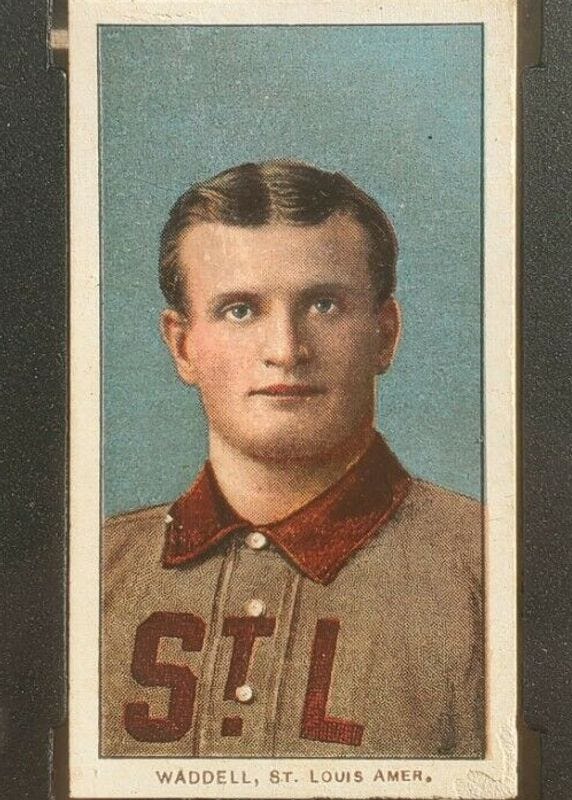
Al: [Laughs] Yeah. There’s another guy, Rube Waddell. He was sort of my gateway drug into this whole thing. They called him “Rube” because that’s what city guys would call farmers.
Rube was a huge manchild. He’d show up late to games because he was playing marbles with children outside the stadium. He was charged with bigamy because he was just getting married all the time and never bothered to get divorced. And, this sounds like a joke, but opponents would literally distract him by bringing puppies and kittens, because they knew he’d run right over.
Then there’s Candy Leance; he didn’t like tobacco, so he ate candy. Mordecai “Three Finger” Brown: he lost two fingers in a farm accident. Oyster Burns. They called him “Oyster” because in the offseason he sold oysters.
I also love the fact that these players weren’t millionaires. A lot of athletes today come from real backgrounds, but a lot of them are the children of other athletes. There is increasingly an athlete class, and it feels kind of ridiculous to go to a stadium and watch our betters play a game. There’s something really beautiful about the fact that Sad Sam Jones had to do shit to survive in the off season.
NICOLE: Have you thought about what your old-timey baseball nickname would be?
Al: Oh, there should be a random generator of old-time baseball nicknames. I hope I wouldn’t be a Rube. It would be something that would hurt my feelings. It would be something journalists latch onto that I’m self-conscious about.
JADIE: When we publish this interview, it’ll be in the title.
Al: Terrifying, thank you.
NICOLE: Are you nostalgic for a time when America really cared about baseball? Is that part of the appeal?
Al: Mostly I just think it’s amusing. In general, I like sports because they’re ridiculous. Like, we’ve assigned importance to a thing that is utterly unimportant, and people care even though it’s so obviously ridiculous and arbitrary.
I love the beginning of baseball as a sport, because right from the get-go they were trying to earn money off it, but they couldn’t quite figure it out. I like when capitalism is trying but can’t quite do something. Like, the Spalding company tried to make a different shirt for every position so they could sell more jerseys: You’re a right fielder; you have to have red and white stripes. Every position had its own look, because they didn’t know how to make money. It’s so stupid. That’s what I love about it: it’s so stupid.
JADIE: How were they marketing the sport itself?
Al: A lot of early sports were endurance tests — I think because normal life was so horrible, people were like, I want to see someone else suffer. The first American sport was called pedestrianism, and it was literally just people walking in circles for incredibly long periods of time. Running was cheating. Meanwhile, baseball was based on some English game, and in the beginning it was all underhand and really boring, and then they figured out, Hey, what if the pitcher actually tries hard to make the batter not absolutely nail the ball?
These kind of inventions are so funny. In early basketball, there was no shot clock. Someone would score a basket and then just hold on to the ball for the rest of the game. And people would put up with that! [Laughs] Could you imagine going to a basketball game, having paid, I don’t know, five hard-earned cents, and then you see one basket and a guy just standing there the rest of the time?! It must have been so frustrating. We’re too entertained now.
NICOLE: Are there other people who share this interest? Is there an old-timey-baseball community?
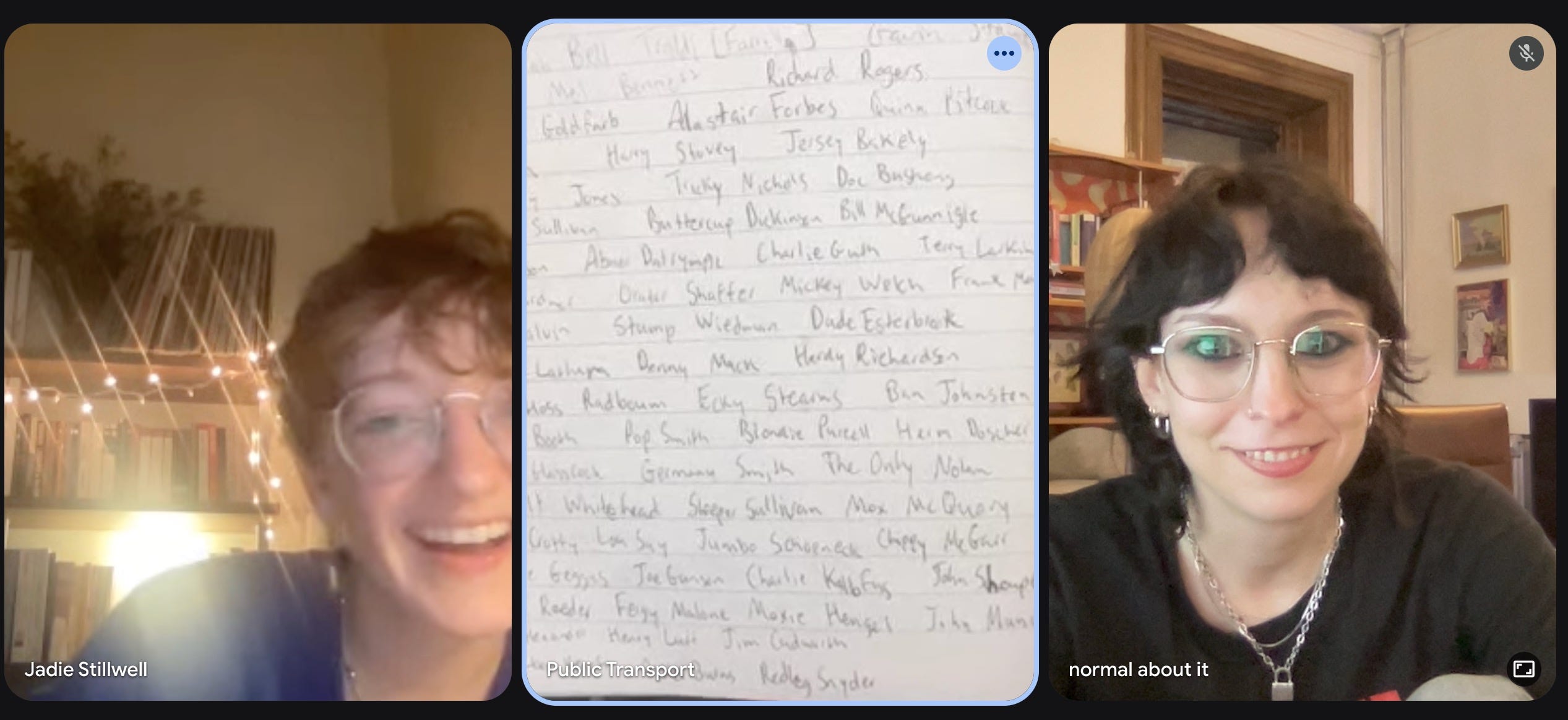
Al: Well, I do love the people who type player Wikipedia pages up. Actually, I just found this — I’m going to send a link to this player Blondie Purcell’s page. Can one of you read the last paragraph aloud for me?
JADIE: “Purcell ran a bookmaking operation during his playing career and continued to do so afterward. It is not known where — or if — he died.” [Laughs]
Al: The Wikipedia authors are amazing people. I don’t know them, though. I don’t really have a community. I have some friends who will indulge me in this interest a bit, but I would not say that it’s a vibrant space.
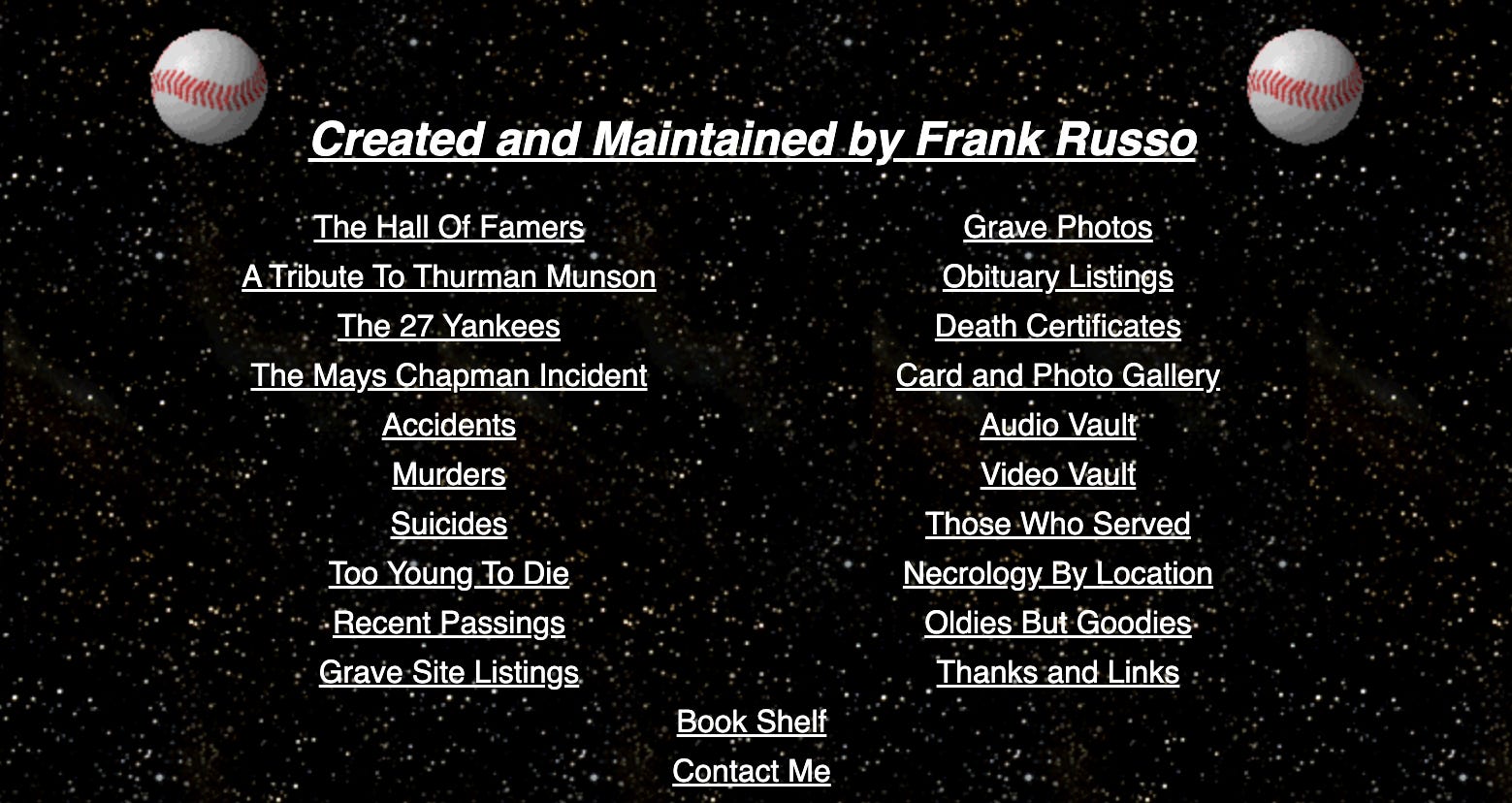
There are websites I go to besides Wikipedia. Dead Ball Era is good. Originally they called this period of baseball “the dead ball era” because they didn’t realize the ball itself was not made of material that would go very far, so it would be mostly ground balls.
NICOLE: It’s so interesting to compare that to the well-oiled machine that is sports today.
Al: Right. And it was totally dysfunctional, and people played because they felt compelled to, not because it was a part of a generational inheritance or for wealth.
NICOLE: You’ve talked a lot about the players, but have you read anything about people going to these early games?
Al: I’ve read a little bit about original fandoms, yeah. They were called Rooters, and some guy in Boston nicknamed “Nuf Ced” was the head fan, and he had a whole bunch of chants.
That’s another thing with American sports: in England and across the globe, they have cool chants. We don’t! I just don’t like the sports culture here. Bring back pedestrianism.
JADIE: What don’t you like about the culture, aside from the athlete class issue? What about the engagement with fans disturbs you?
Al: I guess when I go to a Mets game, it’s like…they play music incredibly loud. Now I sound super old-guy-yelling-at-cloud, but they play music so loud. And it’s so corporatized. There’s the Chase Sapphire first base, and a guy in a helmet that’s just a walking advertisement with a little slit for his eyes. And it’s all too nice. Everyone has trainers and they don’t smoke three packs of cigarettes a day.
I also hate the visible stratification of wealth. When you go to a football stadium, there’s the front row seats for very rich people, and then you progressively get poorer as it goes back. You really see the division of society on display at a stadium. The super wealthy in their boxes looking down at us…c’mon. It’s pretty fucked up.
NICOLE: What did it look like way-back-when?
Al: It was just a big pile of people. There was no one better seat than another. It was all the best seat.
JADIE: What you’re saying about the early days of American sports really exposes the suspension of disbelief that we take for granted now. Like, sports have no stakes except for the stakes we give them, and you’re pointing to a moment where we were literally inventing the stakes.
Al: Yeah. A great example is this stadium in Georgia, where they literally had a magnolia tree in right field, and it was in play. If the baseball hit the tree, that was part of the game.
Apparently the tree is still there. It’s now surrounded by a T.J. Maxx parking lot, which I think is beautiful and also maybe is the story of this whole thing.
NICOLE: Do you feel like the sports betting plague changes things, too? Because that adds financial stakes for not only the people who own these teams, but also the average viewer.
Al: Absolutely. To me, that’s one of the worst things that’s happened lately, especially the fact that the players are involved in it. There’s been some scandals. In basketball especially it’s been happening a lot, and it’s despicable.
NICOLE: It goes back to what you were saying earlier, about how early baseball was figuring out how to capitalize on the game, but now all sports have been entirely monetized.
Al: And part of me is like, people should be allowed to do what they want. Maybe there’s something to be said for what happens in Vegas or whatever. But also there’s something about the league advertising and profiting off it that’s just awful.
JADIE: What would be a good starting place if someone wanted to get into old-timey baseball?
Al: I think honestly just going to a Wikipedia page, finding an old team and clicking around. There will always be one sentence in there that’s basically a whole novel.
I was reading one the other day of a man who refused to use a glove. Like, when baseball started, there were no gloves, and when they started using them this guy was just like, No, I’m not adapting. He was the last guy to not wear a baseball glove.
JADIE: I love the image of this dude catching increasingly fast balls with his bare hands. I wonder if he spent a lot of time in the hospital.
Al: Someone was surely like, “Hey buddy, you sure you don’t want a glove?” No, no, no. That’s newfangled!
JADIE: “That’s not my baseball!”
NICOLE: Is there a certain point at which baseball is no longer old-timey? Like, when did it turn into modern-ball?
Al: I guess maybe the ‘40s. There used to be this thing called the reserve clause, where they would pay a player a salary and that player was not allowed to leave the team. There was no free agency until the 1970s, so players were basically indentured servants until that point.
JADIE: Does your interest in sports history go beyond baseball at all?
Al: I love weird sports stuff, in general. I saw this cricket championship trophy the other day, and it’s the smallest thing imaginable. It has words on it you can’t even read. Imagine you try so hard to win and being like, We got it! Woohoo, here’s a thimble!
There’s something I’ve been resisting even bringing up called real tennis, and I’m really into that as well. They call it that because they don’t recognize what we call tennis as tennis. They think it’s stupid. For real tennis, they play on a court that’s supposed to resemble a medieval village or something. You can hit the ball off roofs that are supposed to be, I don’t know, where people would sell vegetables.
JADIE: Why is that more real?
Al: ‘Cuz it’s old, so that makes it real. It’s the sport of kings.
NICOLE: That makes me think about television, too. Like, real tennis could never be televised. It would be so hard to see. Do you have thoughts on how TV changed the game?
Al: Yes, I think it changed real tennis because television was invented 500 years after real tennis stopped being played.
But no, with baseball, you’re right. Television is interesting in that it brought more money into the sport. That said, I think there’s some beauty to a thing that only happens at the field, and you can’t hear about it until a day later or maybe not at all. It’s more special.
I think certain sports are better on TV. Football is really horrible live and maybe makes more sense when presented televisually. Baseball is best when you’re hanging out, you’re having too many hot dogs and a beer, you’re barely paying attention, and suddenly, you’re like, “Shit, the game’s almost over.” Then you get really invested for just the final inning. Or you can have a good conversation.
JADIE: I think baseball doesn’t translate well televisually because it’s so boring to watch and because the ball is so small and the field is so green. Baseball’s still better on the radio, because we can always narrativize it.
NICOLE: And now they’re taking away the boringness of baseball, too, because they’re speeding it up. So either it’s unbearable to watch because it’s so long, or you make it shorter and ruin the best part, which is that it’s unbearably dull.
Al: Totally. I also love that baseball players warm up every inning. Like, how cold could they have gotten? You’re a professional athlete! Why do you have to warm up? Every other sport, they don’t stretch and do their thing; they just play. But with baseball, they have to take their time.
JADIE: Are you better or worse for knowing about old-timey baseball, and is the world better or worse for it existing?
Al: I mean, unambiguously, without a doubt, yeah. Yes, to both. Better: it is, I am. I think everyone should get involved in old-timey baseball. I want people to bring up Redleg Snyder at a party. I want the Rube Waddell biopic starring Benedict Cumberbatch. I want to go dressed as the Chicago Orphans to a Halloween party.
NICOLE: Wait — I’ve been wondering. We’ve talked so much about baseball, but did you ever actually play?
Al: Oh, yeah. I loved playing outfield growing up, because it was the best time to be an attention deficit-disordered child. I wasn’t very good. My brother was very good.
I was better at real tennis.
did you hear?

