
a celebrity obsessive is normal about paparazzi
stella balsamini's money shot talks
Stella Balsamini is a marketing girlie and certified celebrity obsessive. She was previously normal about the Oscars, and today, she’s feeling normal about paparazzi: the iconic photos, the dying culture, and of course the questionable ethics. We may be witnessing the last gasps of TMZ and Perez Hilton, but the Y2K spirit lives on in Stella, who was born to get “the money shot” — a flow state-slash-divine calling that ends with a blurry Rihanna in your camera roll, dubious social cachet, and primal satisfaction.
This interview has been edited for clarity, coherence, and vibes.
NICOLE: What are you feeling normal about, and how did you first encounter it?
STELLA: I’m feeling normal about paparazzi culture. To be completely real, it’s hard to imagine my life without it. I was raised by a tabloid reporter, and so from a very young age, the idea of celebrity was a core value — and even more so, the idea of having a cool experience and getting as close as you can get to someone famous. My first childhood dream job was to be a paparazzo. I had a little journalist’s notebook that I carried around all the time, and I really wanted to do stakeouts to see if celebrities were going to be somewhere.
I was also growing up in the early 2000s, when the whole ecosystem of paparazzi was peaking. We always had People magazine in the house, at the nail salon, et cetera, and I was on Perez Hilton every day growing up. I was obsessed with all of it. There are paparazzi images that are inextricable from my psyche — I have favorite shots stretching back to when I was six or seven years old.
NICOLE: Is your interest in paparazzi different now that we’re in a social media-slash-DeuxMoi landscape of celebrity spotting?
STELLA: Kind of. I think about paparazzi in a couple of different ways. There’s a layperson being like, I’m going to sell a photo to the highest bidder, or even that feeling, as a fan, of, I need to get a photo of — or with — this person. Then, separately, there’s the actual, professional paparazzi who took all the photos that ended up in People back in the day. These were the regular photographers, the people celebrities knew were going to be following them.
In the 2000s, to some extent, the institution of paparazzi itself was treated as legitimate. Today, social media means you have so much unbridled access to people, and I think there’s more of a stigma around invading someone’s privacy — which is interesting because I think we’re living in the least private time ever. But it feels a bit icky now. I’ve been trying to parse out how much of that is just me becoming an adult, and how much of it is that the culture has actually changed.
Part of the shift for me was that in 2020, 2021, my family got doxxed. Basically, my dad did a story that was objectively bad; it dove into the life of a private citizen, and it was kind of violating to this person. I’m not trying to defend it, but it wasn’t my dad’s idea, and it was pushed by his editors — although honestly, I don’t think he could conceptualize what made this different from writing about celebrities. Anyway, then AOC retweeted the story and said, “Leave this woman alone” or something like that, and all these people piled on.
JADIE: The irony of doing that in response to feeling like someone’s privacy had been violated…
STELLA: Exactly. And even as this relatively unaffiliated person, it affected me, because it’s my dad. After that, I started thinking about my own privacy very differently. I remember realizing how crazy it would be to be a celebrity, where everybody’s tracking you, following you — so I don’t get the same rush from paparazzi photos that I used to.
Ironically, people who submit photos to DeuxMoi probably consider themselves more “normal” than a paparazzo, but I actually think it’s creepier to submit a photo anonymously instead of being like, I’m a sicko, and this is my job. The latter is almost like being a plumber — it’s a vocation. A lot of these 2000s photographers were terrible, but I almost respect the fact that it was a beat for people, even though as an adult, my instinctual reaction to it is negative.
NICOLE: Something I’ve heard you talk about before is the innate urge you have to get a picture when you’re near a celebrity. Can you speak to that?
STELLA: The urge is so strong. When I was younger, I was invited to go to the Madame Tussauds unveiling of the Jonas Brothers’ wax figures, because my dad knew someone doing PR there. That was the first time I really thought, I have to make the most of this moment. I was standing in line to meet them, and I was like, This is great, because I can see how they’re positioned, so I can angle myself to get a picture with Nick. I didn’t even think Nick was hot — I knew everybody else thought Nick was hot. Then the friend who invited us was like, “Come to this side; I can get you closer.” And I realized: I’m going to end up with a picture of Kevin. It’s all over. And that’s exactly what happened.
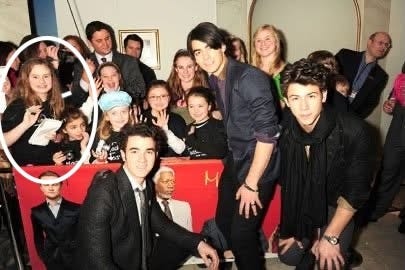
Even then, I knew the value of having the “better” shot with the “better” person. It’s like how people describe going to a movie and thinking about what their Letterboxd review is going to be — for me growing up, it was always, What is the shot?
NICOLE: And when you say “the shot,” what exactly does that mean?
STELLA: It’s literally, like: I know what position and angle I need for it to be good. You need to get the face, obviously.
The example that comes to mind is years ago, when I was living in LA — I was driving in a car with my friend in the backseat, and we were in a fight and I was upset. And she goes, “Stella, I’m not trying to distract you right now, but Rihanna and A$AP Rocky are in the car next to us.” And I cut the tears; the fight was over. I said, calmly, “Turn around right now, zoom in and take a photo.” It was a muscle memory thing; I just locked in. And then we got it, and I wasn’t even upset at her anymore, because we got the money shot. There’s just this drive within me that’s like, I see what has to be done, and I can execute.
JADIE: It’s funny you call it the “money shot,” because there’s actually no return on this investment, financially. [Laughs]
STELLA: Not at all. There’s not even a social return; it’s cringe to post a selfie with someone now, or even a photo of them. As an adult, there have been a few times when I’ve seen a celebrity out and about and been like, I know exactly what picture I’d take right now, but it’s socially inappropriate for me to do that.
There was a time when it felt like a game — like, remember that girl who took pictures with every celebrity? Crazy Lizzie, or something?
NICOLE: Stalker Sarah!
STELLA: Yes. At the time of Stalker Sarah, getting a photo with a celebrity was almost like collecting golden rings — especially because there was such a clear A list, B list, C list. When YouTubers started getting big is when that all broke down, because fame became so relative. But for a while, there was a feeling of a “get,” and of cinching something.
I personally don’t like having interactions with celebrities anymore. If I really like someone, I almost never want to talk to them or meet them — I prefer their stage persona. There’s still an urge to have A Moment, but then, like, what is that moment even for?
NICOLE: What do you think about the innately antagonistic relationship between celebrity and paparazzi, and the voyeuristic relationship between celebrity and fans?
STELLA: It’s been so weird to watch that stuff shift over the years, because these days, celebrities are mainly calling paparazzi on themselves, whereas it was so organic before. Now, the photos are much more flattering, you know? And it was a different dynamic when paparazzi fed into the parasocial relationships people had with celebrities. Back then, I felt much more embedded in celebrities’ lives through paparazzi — I felt like I was seeing them in a story-like, telenovela way, rather than just looking at a photo. Now it’s more like, These are people I already know about, and I don’t need the middleman.
I think about this a lot with the Brangelina kids, who showed up all the time in the tabloids. I was so into them, and I wanted to follow everything that was going on with them. I knew all the kids’ names. It was almost like the parasocial relationships people have today with family vloggers — as a kid, I remember thinking, Oh my God, I wish they were my parents. I could wear these designer clothes and do all this stuff. Little did I know the family was actually abusive and really scary. But during that era of paparazzi, it felt like you, as the viewer, were part of the story.
JADIE: There was a glamour to it as well, right?
STELLA: Yes, totally. That era shaped the way I saw celebrities. I loved reading about these people going to crazy parties, and I never really thought about it in a judgmental way. Looking back now, I can see people saying, This was really sexist, or criticizing the coverage. But at the time, everything felt really interactive and fun. It felt like a cast of characters I was watching every week.
JADIE: You said earlier that you have favorite paparazzi photos — what are those?
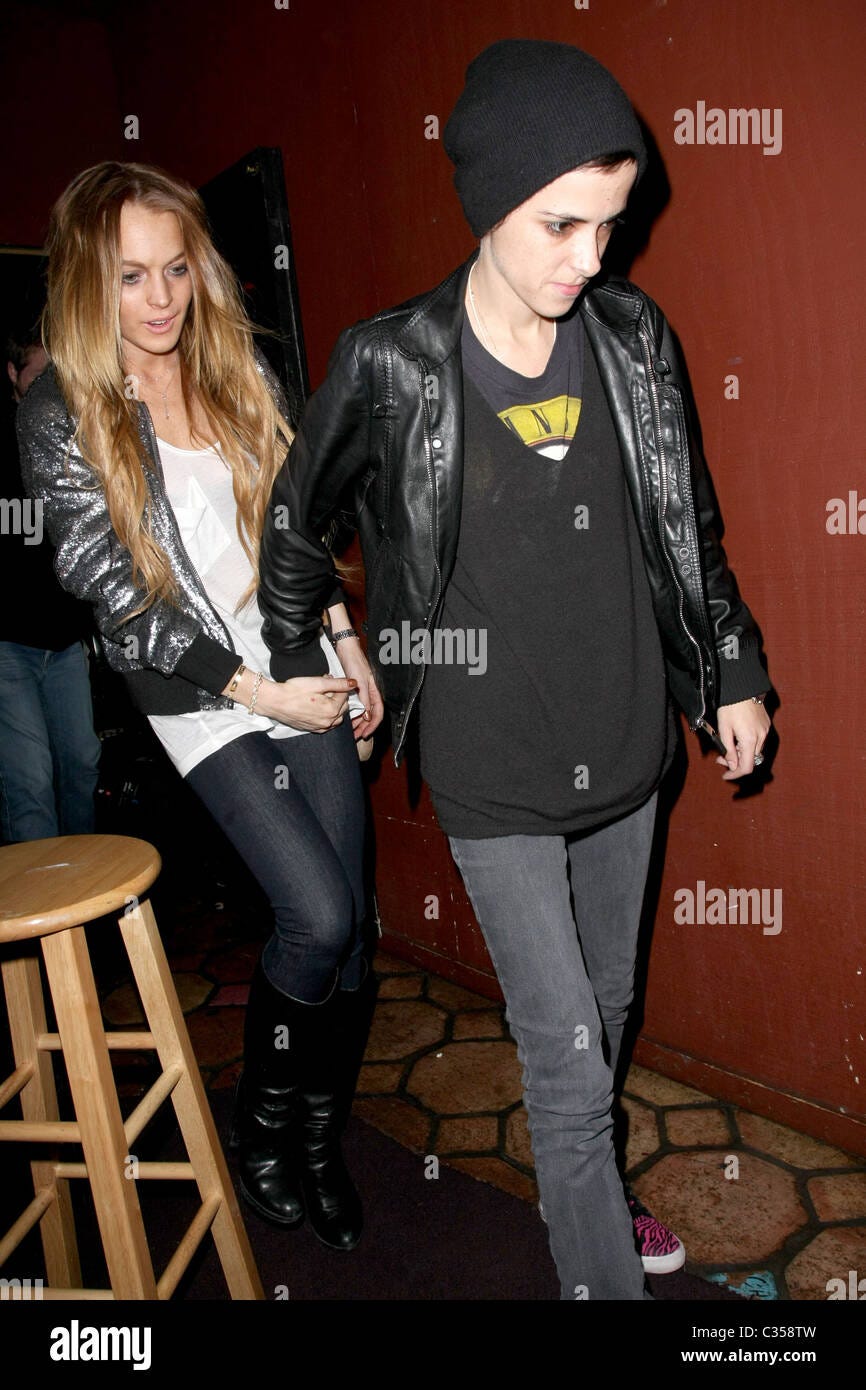
STELLA: Oh my god, so many. The one that comes to mind — especially because it’s the end of Pride month [Laughs] — is everything with Samantha Ronson and Lindsay Lohan, which was crazy to me. Basically, Mark Ronson has a sister who’s gay and an international DJ, and she fully dated Lindsay Lohan for several years. There’s a photo of them stumbling out at night, which I think about all the time.
NICOLE: Do you have fantasies of being papped yourself?
STELLA: Yes. This is actually what I’ve wanted my whole life. I want to step out with some really famous person, and the paparazzi get me. I’m like, “Oh my god, I’m just in my sweats,” but I look gorgeous. And they go: Mystery Woman. “Mystery woman” was the greatest photo genre of all time, because back in the day, we really didn’t know who the mystery woman was! Now you always know who it is in two seconds, because everyone has social media.
NICOLE: If someone else wanted to get normal about the paparazzi, where should they start?
STELLA: I think there’s the old and new vanguard. I think you can choose to go back into history and unlock some pretty crazy stuff, which is fun if you’re into everything Y2K. There’s Jersey Shore, there’s that show with Paris Hilton and Nicole Richie, and even early Kardashian seasons, where you can see how paparazzi start blending into the filming.
If you’re interested only in new stuff, you just have to follow celebrity news on Instagram and Twitter. Follow Pop Crave, I guess. It’s less exciting.
JADIE: Are you into the aesthetics of the paparazzi photograph at all? Like, the street style element, or the particular construction…?
STELLA: Absolutely not. The messier it is, the better. If it’s an orchestrated shot, it looks terrible. And I like things that look wrong in some way. I’m thinking about Timothée Chalamet getting his soul sucked out of him by Lily-Rose Depp — we’ve all seen images like that, where the way it’s composed changes the meaning of what you’re looking at.
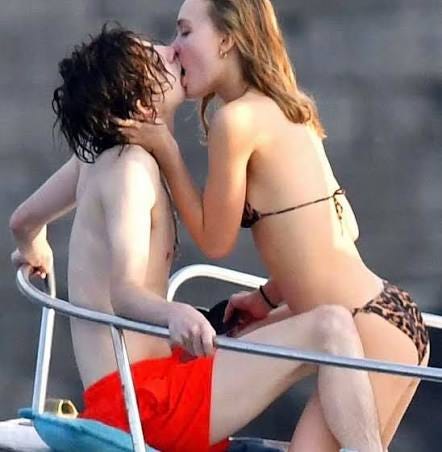
NICOLE: Have you had recent celebrity sightings that made you think about privacy and paparazzi in new ways?
STELLA: Yeah, definitely. I saw A Streetcar Named Desire at the BAM when Paul Mescal was in it, and afterwards, he signed playbills at the stage door and then walked out to a side street. I happened to be there — no one else. I look over and see a clearly distraught, disheveled Paul Mescal smoking a cigarette.
Then a girl and her boyfriend turn the corner and she screams at him, “Hey Paul, want to make out?” I swear to God, those were the words that came out of her mouth. Paul Mescal immediately throws the cigarette down and starts sprinting, literally sprinting, down the street to get away from her. It was so awkward, because then I was just there with that girl, and she’s trying to explain to her boyfriend, like, Oh, haha, I don’t know if I should have said that.
And I felt so bad for Paul. But I also was like, what an incredible moment — those two things were juxtaposed in my head. I also knew it would be a great picture, but I had been pretending not to see him, trying to give him privacy. I was trying so hard to be normal for once, and then that happened — and for all he knows, it could’ve been me who said it.
NICOLE: It’s funny, because for that girl, the excitement of the moment was that it was Paul Mescal. But for you, the celebrity is interchangeable — it’s all about the fact of proximity to celebrity.
STELLA: Yes — although like I said, it’s not necessarily a fact anymore, because the tiers of celebrity have broken down so much. Like, I don’t think my grandma knows who Dua Lipa is, and her paparazzi photos are everywhere right now.
NICOLE: Are you better or worse for knowing about the paparazzi, and is the world better or worse for the paparazzi existing?
STELLA: I’m going to say I’m better. I think I am a very observant person to the world around me, and this feeds into that. Similar to my obsession with the Oscars, I’m able to feel intensely about something that has no stakes — and I think this is a reasonably healthy Internet rabbit hole to go down, compared to some of the scarier, conspiracy theory ones. A lot of people have strong feelings about body insecurity related to the paparazzi, and the photos feeding into that, and I guess that element of it never affected me. I just cared about the different characters, like I said.
I think paparazzi are 100% negative for the world at large, but I struggle to imagine what people like me did in the Victorian days, you know? Like, what was the channel for that kind of obsession?
JADIE: Witchcraft, probably.
STELLA: I’m just glad I’m alive right now. I was born for this era; let’s leave it at that.
did you hear?

